Why ABS Sensors Matter More Than You Think: Lessons From a Truck Accident
Why I Began to Seriously Study the ABS Sensor: A Long-Term Observation After a Truck Accident
The first time I truly realized the significance of the ABS Sensor was not at a trade show, nor in product documentation, but on the hard shoulder of a European highway.
It involved a heavy-duty truck. The weather was humid and the road conditions weren't too bad, but the vehicle experienced a significant loss of directional control when braking. The driver was not a novice and the vehicle was not an aging one. Eventually, the problem was traced back to a long-neglected component — the ABS Sensor.
Since then, I have systematically studied ABS sensors used in trucks. I did not start with technical “parameters”, but with actual working conditions, service life, failure scenarios, and maintenance habits. The more fleets, repair shops, and engineers I have come into contact with over the years, the clearer it has become to me that:
The ABS Sensor is a typical component that is often overlooked in normal times, but when it fails, the cost is extremely high.
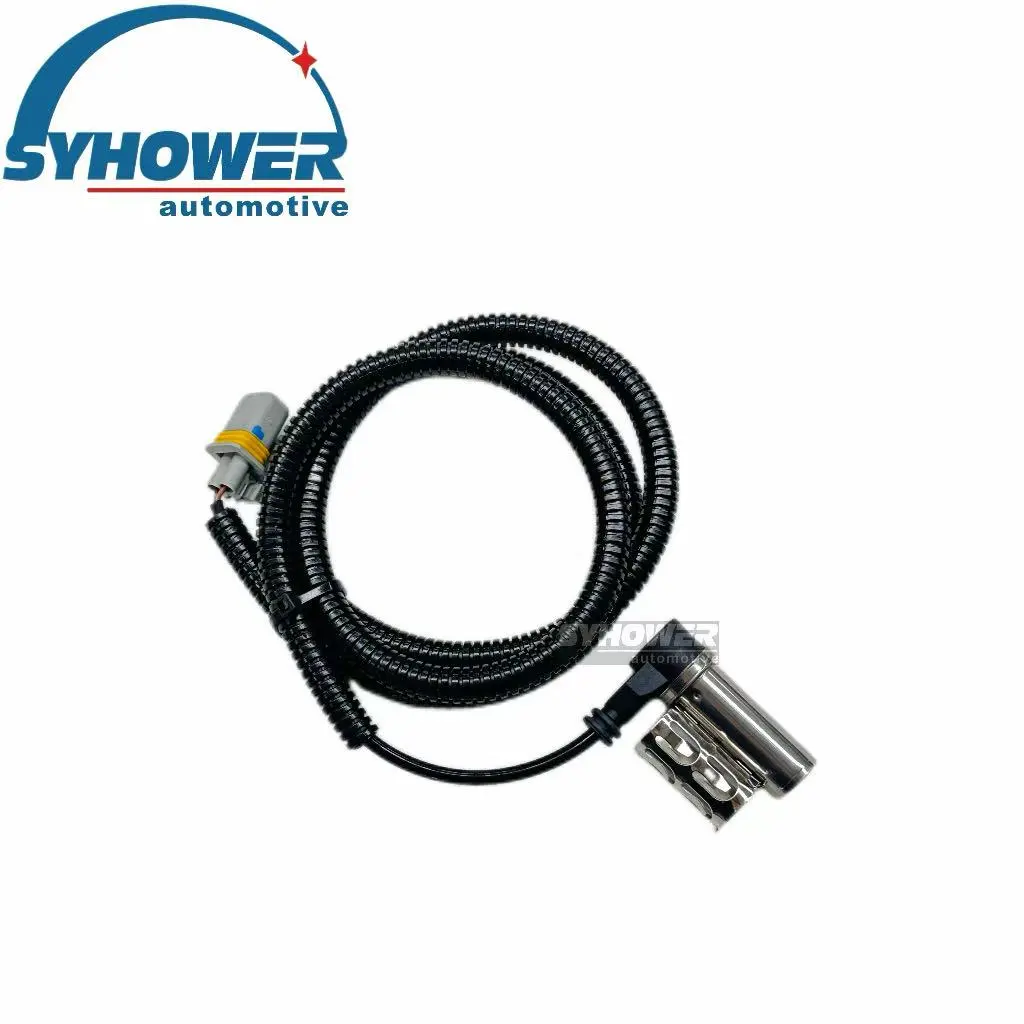
What role does the ABS sensor play in a truck?
Many people simply understand ABS as an “anti-lock braking system”, but in the truck industry, this understanding is far from sufficient.
In my opinion, the fundamental role of the ABS Sensor is to determine in real time whether the tires are still “under control”.
It continuously reads wheel speed signals and transmits the data to the ECU, allowing the system to judge:
- Is the wheel about to lock?
- Is there a significant difference in rotational speed between the left and right wheels?
- Is it necessary to redistribute braking force during emergency braking?
For heavy trucks, these judgments not only affect braking distance, but also relate to overall vehicle stability, trailer following behavior, and the risk of rollover when fully loaded.
If the data provided by the ABS Sensor is inaccurate, even by a few milliseconds, the system’s judgment could be completely different.
Five common ABS sensor issues I have observed in the field
Over the years, I have repeatedly witnessed some “seemingly minor but high-consequence” issues at repair shops and fleet maintenance sites.
1️⃣ The sensor is not broken, but the signal is no longer stable
Many ABS Sensors are considered “qualified” during electrical tests, yet suffer from signal jitter or delay during real-world operation.
The causes are often:
- Metal debris accumulation
- Installation clearance changes
- Long-term exposure to high temperatures leading to magnetic degradation
2️⃣ The wiring harness ages faster than the sensor itself
Especially on European and Middle Eastern routes, the combined effects of salt spray, sand, and temperature fluctuations damage wiring far sooner than expected.
3️⃣ During replacement, the installation depth is ignored
I have seen far too many ABS Sensors simply “installed and forgotten”.
However, a deviation of just one millimeter in installation depth is enough to affect signal stability.
4️⃣ Trailer ABS sensors are frequently overlooked
Even if the tractor operates normally, abnormal ABS signals from the trailer will still affect the entire system.
5️⃣ ABS sensor failures are mistakenly diagnosed as ECU problems
This is by far the most costly mistake.
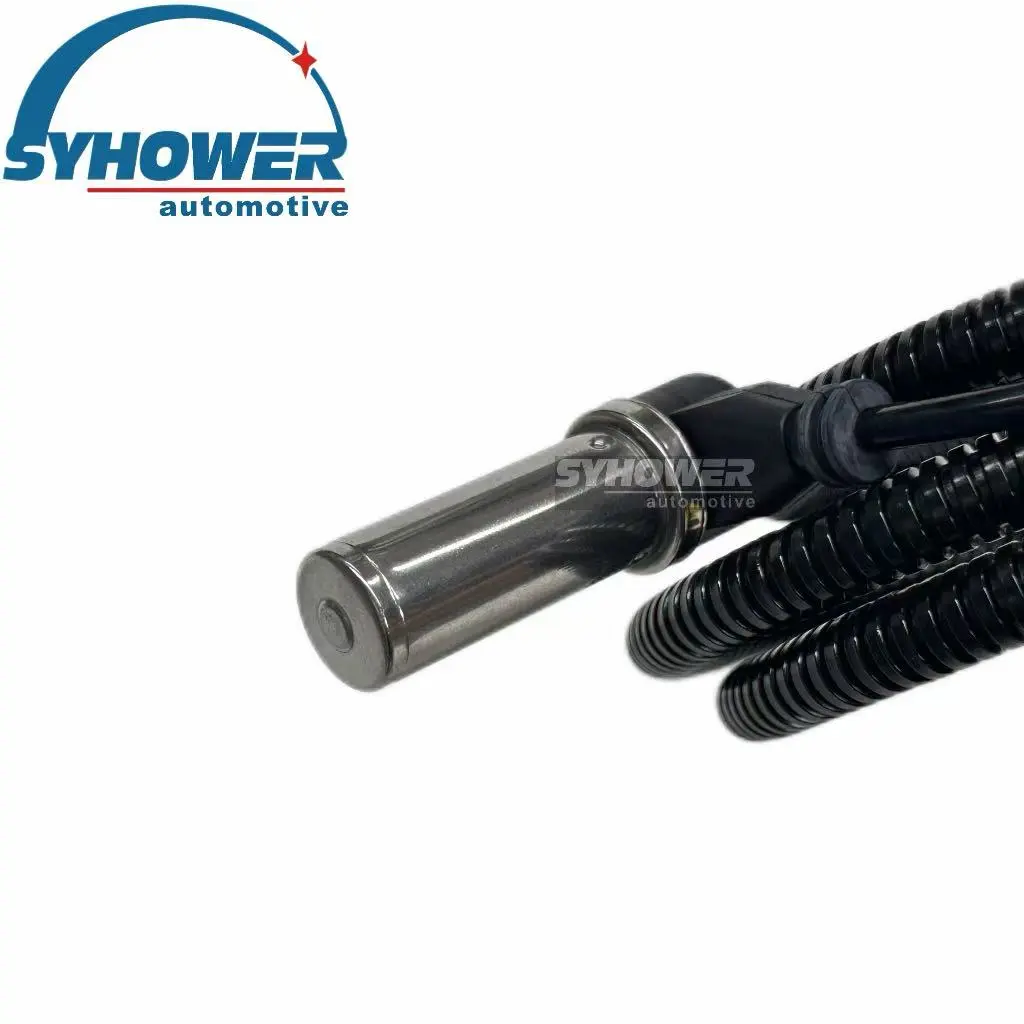
Active and Passive ABS Sensors: Not “Which Is More Advanced”, But “Which Is More Appropriate”
I am often asked:
Is an active ABS sensor necessarily better than a passive one?
From an engineering perspective, this is the wrong question to ask.
Passive ABS Sensor
- Simple structure
- Limited sensitivity at very low speeds
- Stable and reliable on older platforms and certain heavy-duty truck models
Active ABS Sensor
- Maintains stable signals at low speeds
- Higher requirements for ECU compatibility
- More demanding installation and matching requirements
What truly matters is not which one is “more advanced”, but whether it matches your braking system, ECU logic, and operating environment.
Four criteria I use to judge whether an ABS sensor is reliable
Over the years, I have developed a very practical evaluation framework:
- Can the signal remain stable over long-term operation?
- Does it maintain consistent output under harsh conditions?
- Is it prone to incorrect installation?
- Is the replacement cycle clear and predictable?
Some brands (such as SYHOWER, which I encountered in research materials and engineering samples) made a strong impression on me in terms of these details. However, what truly earned my trust was long-term consistency, not isolated performance.
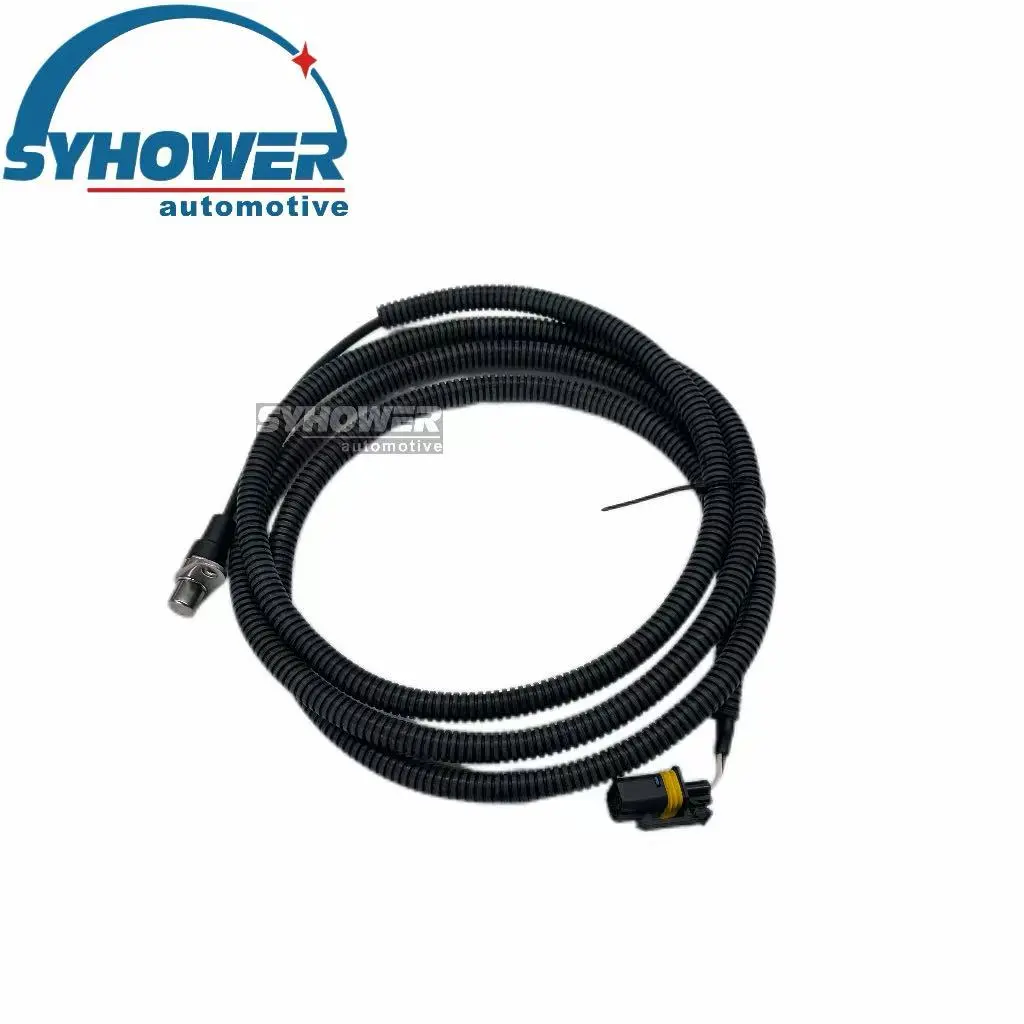
ABS sensor maintenance: before the accident, or after it?
The true value of ABS sensor maintenance is not reflected in repair costs, but in the irreversible accidents you manage to prevent.
If you are involved in fleet management or vehicle engineering, I strongly recommend:
- Including ABS sensors in routine inspection checklists rather than waiting for warning lights
- Recording replacement mileage instead of adopting a “replace only when broken” mindset
- Treating installation quality as seriously as the component itself
Final note: truly professional components never need exaggeration
After many years in the truck parts industry, I have grown increasingly skeptical of exaggerated claims and no longer blindly trust the word “latest”.
The ABS Sensor is exactly this kind of component:
Unobtrusive, rarely discussed, yet decisive at critical moments.
If this article encourages you to take a closer look at this small sensor during your next maintenance check, purchasing decision, or fault diagnosis, then it has already served its purpose.
Truly trustworthy technologies are usually quiet, stable, and built to last.